
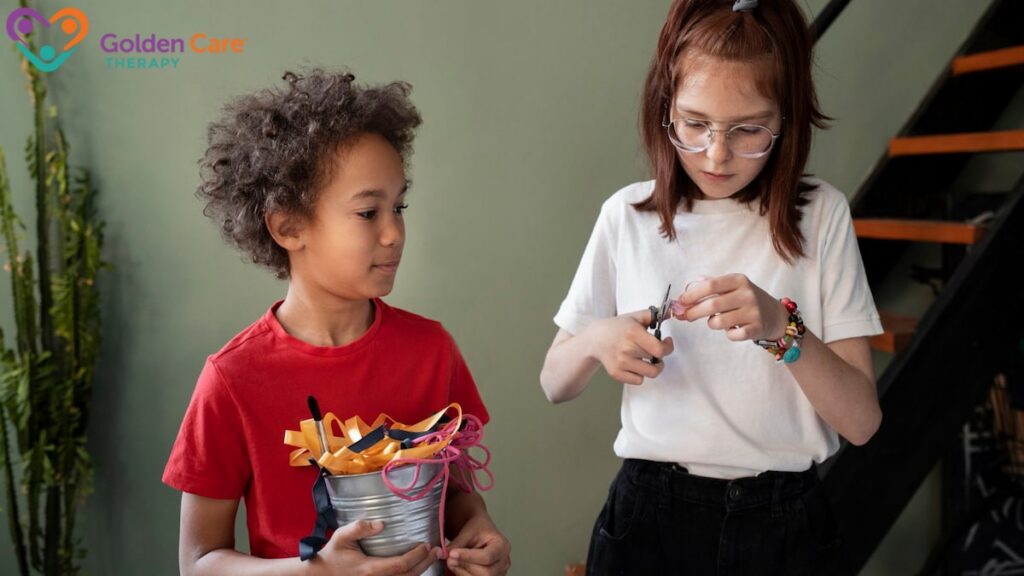
Turn-taking and sharing are foundational social skills that shape how children build friendships, solve conflicts, and participate in group settings. These abilities begin developing in the toddler years and continue growing throughout early childhood. Research consistently shows that early social play experiences strongly predict later communication skills, peer acceptance, and classroom readiness.
For many children, especially those who need extra support with communication or flexibility, learning to wait, share materials, or take turns can feel overwhelming. That is where structured guidance and intentional practice make a meaningful difference. Whether your child is navigating pretend play autism challenges, learning cooperation for the first time, or working on flexibility in group settings, this guide offers practical, family-centered strategies you can use right away.
You do not need special equipment or long therapy sessions. With consistency, modeling, and the right play structure, turn-taking and sharing can become natural parts of daily routines.
Why Turn-Taking and Sharing Matter
Turn-taking and sharing are more than polite behaviors. They are building blocks for:
- Emotional regulation
- Perspective taking
- Communication growth
- Problem-solving skills
- Peer relationship development
When children practice waiting for their turn, they strengthen impulse control. When they share materials, they practice flexibility and empathy. Studies in early childhood development show that cooperative play supports language growth, especially when children negotiate roles and respond to peers.
For children working on symbolic play development, turn-taking often becomes easier when play has structure. Clear roles and predictable routines reduce anxiety and increase participation.
Children who struggle with waiting are not being difficult. Often, they need explicit teaching, repetition, and visual or verbal cues that make expectations clear.
Understanding Developmental Stages of Play
To teach turn-taking effectively, it helps to understand how play naturally develops.
Early play usually starts with functional exploration, stacking blocks, pushing cars, or filling and dumping containers. This stage connects closely to functional play training, where children learn how toys are used and how actions create outcomes.
As skills grow, children begin:
- Imitating simple actions
- Engaging in parallel play beside peers
- Taking short turns with adult support
- Participating in simple back-and-forth games
Later, they move into imaginative scenarios. During pretend play autism interventions, caregivers often notice that shared imagination requires more advanced turn-taking skills. Children must listen, respond, and build on another person’s idea.
If your child is not yet sharing or taking turns, start at their current play level. Strengthen engagement first, then gradually introduce structured exchanges.
Step-by-Step Strategies to Teach Turn-Taking
Start With Short, Predictable Turns
Keep early turns brief, 5 to 10 seconds at first. Use clear language such as:
- “My turn.”
- “Your turn.”
- “Now you.”
Visual timers can reduce anxiety around waiting. When children know exactly when their turn is coming, resistance decreases.
Board games with simple rules, rolling a ball back and forth, or taking turns stacking blocks are ideal starting points.
Model Calm Waiting
Children learn emotional regulation through observation. When you wait calmly, narrate it:
“I am waiting for my turn. Waiting is hard, but I can do it.”
This language supports creative play skills while teaching coping strategies.
Use Structured Play Scenarios
Planned play scenarios provide natural opportunities for turn-taking. For example:
- Cooking pretend meals and taking turns stirring
- Building a tower and alternating blocks
- Playing store where one person is cashier, then switching roles
Structure reduces unpredictability. Predictability reduces stress.
Reinforce Success Immediately
Notice and describe positive behaviors:
- “You waited for your turn.”
- “You shared the blocks.”
- “You let your sister go first.”
Specific praise strengthens repetition far more effectively than general comments.
Teaching Sharing Without Power Struggles
Sharing is complex because it requires emotional flexibility. Instead of forcing immediate sharing, try these strategies.
Teach the Concept of “Wait” Before “Share”
Children must tolerate waiting before they can comfortably share. Practice waiting in low-pressure settings, such as snack time or during short games.
Use “First-Then” Language
“First your brother plays with the truck, then you get a turn.”
This structure is especially helpful in role playing autism interventions where sequencing improves predictability.
Offer Duplicates When Possible
During early teaching, having two similar toys reduces conflict. Once turn-taking improves, gradually reduce duplicates to build flexibility.
Avoid Overuse of “Say Sorry”
Instead of focusing on apologies, focus on repair and action. Encourage children to:
- Offer a turn
- Trade toys
- Ask politely
These behaviors build lasting cooperation.
Supporting Children Who Struggle With Flexibility

Some children experience intense distress when asked to share or wait. This is common in children with social communication differences.
Here is how to help.
Break Skills Into Small Steps
Instead of expecting full sharing, begin with:
- Tolerating someone sitting nearby
- Handing over a toy for two seconds
- Watching another child play
Gradual exposure builds tolerance safely.
Practice During Calm Moments
Do not teach new sharing rules during meltdowns. Practice during regulated, calm play sessions.
Use Visual Supports
Turn cards, visual timers, and simple charts showing “my turn” and “your turn” reduce verbal demands and increase clarity.
Incorporate Imaginative Play Therapy
Structured imaginative play therapy helps children rehearse social exchanges in low-pressure settings. Acting out stories with dolls or action figures allows children to practice giving turns, negotiating, and resolving conflict symbolically before doing it in real life.
Building Turn-Taking Into Daily Routines
You do not need separate sessions to practice. Everyday life provides natural teaching moments.
Try these:
- Taking turns choosing songs in the car
- Alternating who pours ingredients while cooking
- Rotating who presses elevator buttons
- Switching roles during cleanup
Incorporate creative play skills into routine tasks to increase flexibility across environments.
Consistency matters more than duration. Five minutes of structured turn-taking daily is more effective than occasional long sessions.
Encouraging Peer Play
Once your child practices with adults, gradually introduce peers.
Start with:
- One calm peer
- Short playdates
- Structured activities like puzzles or simple games
Prepare your child beforehand. Review expectations:
- We take turns.
- We wait.
- We use kind words.
If your child is working on pretend play autism goals, guide shared storytelling gently. Offer scripts such as:
- “Let’s both be doctors.”
- “You give the shot, then I will.”
Role exchanges strengthen both language and cooperation.
When to Seek Additional Support

If your child:
- Avoids peers consistently
- Becomes extremely distressed during sharing
- Shows limited engagement in symbolic play
- Struggles with reciprocal interaction
Professional support can help. Structured functional play training and guided role playing autism interventions can break complex social skills into manageable steps. Early support often leads to stronger long-term outcomes.
The goal is not perfection. The goal is progress and confidence.
FAQs
At what age should children start taking turns?
Many toddlers begin simple turn-taking around age two with adult support. More consistent sharing and cooperative play typically develop between ages three and five.
What if my child refuses to share every time?
Start with very short, predictable turns and use visual timers. Build tolerance gradually rather than forcing immediate sharing, which can increase resistance.
How can I teach turn-taking during pretend play?
Use structured play scenarios with clear roles. Alternate actions verbally, such as “You stir, I stir,” to support symbolic play development and cooperation.
Does imaginative play help social skills?
Yes. Imaginative play therapy allows children to practice flexibility, negotiation, and empathy in a safe, low-pressure way before applying skills with peers.
How long does it take to see progress?
With daily short practice and consistent modeling, many families notice small improvements within weeks. Steady repetition and positive reinforcement are key to lasting change.
From Shared Toys to Shared Joy, Helping Play Build Connection
Play becomes meaningful when children feel confident joining in. At Golden Care Therapy, therapists use imaginative play therapy and structured role playing autism exercises to teach turn taking and sharing in natural ways. Functional play training lays the groundwork before expanding into cooperative games and peer interaction.
Children practice symbolic play development while learning flexibility and patience. Families across Georgia notice improved engagement during play dates and smoother peer interactions. Parents receive guidance on reinforcing creative play skills at home so progress continues beyond sessions.
When play is supported with intention, it becomes a bridge to lasting social connection. Contact Golden Care Therapy to discover how structured play can strengthen your child’s social growth.