
Blog

Designing a Functional Room Setup for Autism Support

Creating an effective classroom environment is essential for supporting children with autism. From thoughtful design to considering students’ individual needs, several factors play a crucial role in enhancing learning experiences. The proper setup of the classroom environment significantly boosts engagement and cooperation while reducing disruptive behaviors among children with autism.


Read More

My Autistic Child Loves to Cuddle: Is It Normal?

For some autistic children, expressing love through touch, such as cuddling or hugging, can be a meaningful way to connect with others. Even though they may be touch-resistant due to sensory issues, their desire for physical closeness and affection remains. These children may seek out cuddling as a way to

Read More

Giftedness and Autism: What You Should Know

The term “twice exceptional” (2e) is often used to describe individuals who are both intellectually gifted and have a neurobiological difference, such as autism. These individuals possess a unique combination of strengths and challenges, which can present certain complexities when it comes to understanding their needs and providing appropriate support. In-home

Read More

Asperger Anger Issues: Triggers and Management Tips

While individuals with Asperger syndrome often exhibit strengths in particular areas, such as intense focus on specific interests or exceptional attention to detail, they may also grapple with challenges in managing their emotions, including anger. Anger in individuals with Autism Spectrum Disorder (ASD) can be complex and influenced by a variety

Read More

Signs My Autistic Child Will Talk

Acquiring language skills is a significant milestone for all children, including those with autism. The ability to communicate effectively through spoken language opens up opportunities for social interaction, self-expression, and learning.  According to research, acquiring useful language skills by age 5 is a strong predictor of positive outcomes in individuals

Read More

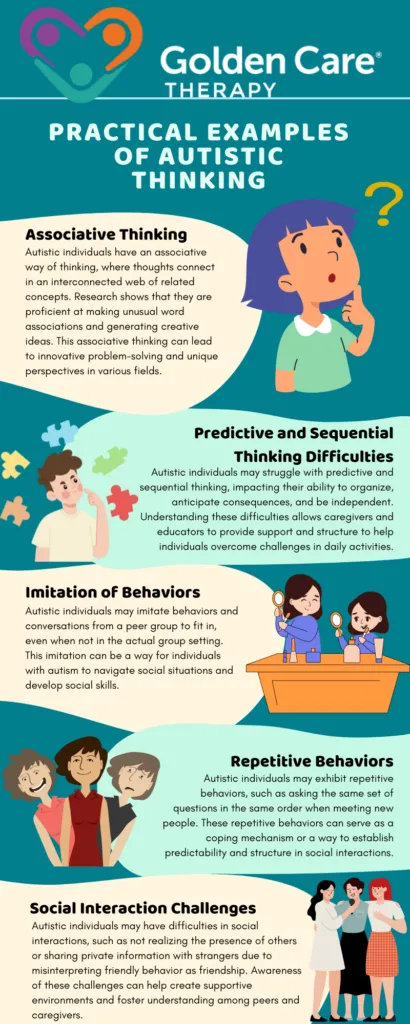
Understanding ASD: Autistic Thinking Examples

To understand autistic thinking, we have to recognize and appreciate the different cognitive styles that individuals on the autism spectrum may possess. Temple Grandin, a renowned scientist and autism spokesperson, identified three specialized cognitive types in autistic individuals: visual thinkers, verbal/logic thinkers, and pattern thinkers. Characteristics of Each Thinking Style Visual

Read More