
Ever wondered why some people seem to think, feel, or experience the world in beautifully unique ways? Maybe you’ve met a child who spends hours building intricate LEGO cities or an adult who’s brilliant with numbers yet finds small talk tricky. That’s where curiosity begins and where we start asking, what is the difference between ASD and Asperger’s?
The answer lies not in separating people, but in understanding the amazing diversity of human minds.
A Shift in How We Understand the Spectrum
The story of Asperger’s and autism isn’t about changing people—it’s about changing perspective. Over time, experts realized that every autistic individual shares more similarities than differences, leading to one inclusive diagnosis: Autism Spectrum Disorder (ASD).
How It Evolved
- Before 2013, Asperger’s Syndrome stood on its own in psychology textbooks.
- It described people with strong language skills, average-to-high intelligence, and subtle social challenges.
- These individuals often thrived in academics or technical work but found small talk or social nuance confusing.
- Teachers might’ve called them “bright but quiet,” while adults often excelled in analytical or creative fields.
Why It Changed
- In 2013, the Diagnostic and Statistical Manual of Mental Disorders (DSM-5) merged Asperger’s with autism under ASD.
- The goal: bring clarity and consistency to diagnosis.
- Researchers, including those from the National Institute of Mental Health, found that traits once labeled “Asperger’s” were part of the same neurological continuum as autism—just expressed differently.
- Instead of dividing people into separate boxes, the DSM-5 recognized that autism varies by intensity and support needs, not type.
Why the Term “Asperger’s” Still Sticks
Here’s the intriguing part. Even though the DSM-5 no longer lists Asperger’s as a separate diagnosis, the term continues to live on in pop culture, advocacy groups, and everyday conversations.
Why? Because language evolves slower than science. For many, “Asperger’s” feels more specific—less medicalized, more personal. It reflects intelligence, focus, and individuality rather than a disorder label.
But it’s important to note: the term also carries complex history. Hans Asperger, the Austrian pediatrician who first described the condition in the 1940s, has a controversial past linked to Nazi-era programs. Some communities have chosen to move away from using the name out of respect, while others reclaim it as part of neurodivergent identity.
So, when asking what is the difference between ASD and Asperger’s, part of the answer lies in social and ethical evolution, not just medicine.
How the Brain Processes the World Differently
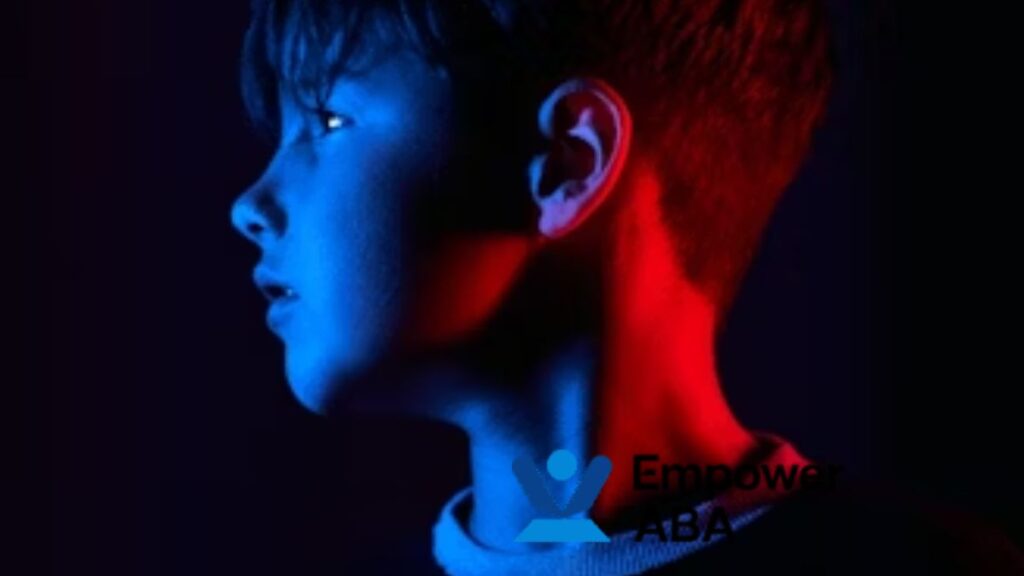
Imagine walking into a room filled with bright lights, buzzing machines, and overlapping chatter. Most brains tune out background noise. But for someone on the autism spectrum, every detail may come in at full volume.
That sensitivity isn’t a flaw—it’s a difference in sensory processing. Brain-imaging studies show that autistic individuals have unique connectivity patterns, especially in areas tied to social understanding and sensory input.
This helps explain why many people with Asperger-like traits prefer clear rules, predictable routines, or quiet spaces. Their minds often excel at spotting patterns and solving problems others miss.
What Is the Difference Between ASD and Asperger’s?
So, what is the difference between ASD and Asperger’s today? Technically, Asperger’s no longer exists as a separate diagnosis—it’s now part of the autism spectrum. The main distinction lies in how the condition was described before 2013, when the DSM-5 officially combined Asperger’s with Autism Spectrum Disorder (ASD).
People once labeled as having Asperger’s usually:
- Did not have delayed language development
- Had average or above-average intelligence
- Displayed milder social challenges
- Functioned well in school or at work
In contrast, broader ASD can include a wider range of communication, learning, and sensory differences.
Here’s a simplified comparison:
| Aspect | ASD (Autism Spectrum Disorder) | Asperger’s (Historical Term) |
| Language Development | May have delays in speech or nonverbal communication | Typically no language delay |
| Cognitive Abilities | Ranges from intellectual disability to high ability | Average to above-average intelligence |
| Social Interaction | May struggle with social cues or emotional reciprocity | Difficulty with nuance but wants to connect |
| Repetitive Behavior | Present; may include intense routines or stimming | Present, but often more subtle |
| Diagnosis (Current) | DSM-5: ASD (Levels 1–3) | No longer used as a separate diagnosis |
In short, someone who would’ve been diagnosed with Asperger’s before 2013 is now recognized as having ASD, Level 1. The difference is mostly in terminology—not in the lived experience.
Shared Traits, Unique Expressions

Every person on the spectrum is different, yet some traits appear often among those once called “Aspies”:
- Deep passion for specific interests—like coding, astronomy, or art
- A literal communication style—direct talk feels easier than sarcasm
- Preference for structure—predictability provides comfort
- Strong memory and pattern recognition—details stand out naturally
Across the wider spectrum, these traits appear in varying forms. Some individuals speak little but communicate through gestures or writing. Others live independently and lead successful careers.
That’s why experts emphasize: autism is not one condition but a spectrum of experiences—each reflecting a unique way the human brain works.
Real-World Examples
Picture two students in a classroom.
Maya, age 9, loves drawing planets and can talk about the solar system for hours. She finds it hard to join group games but shines in science fairs. Ten years ago, she might have been labeled as having Asperger’s.
Eli, age 5, doesn’t speak much yet but expresses joy through laughter, hugs, and building towers. He also finds bright lights overwhelming. Today, both Maya and Eli would fall under ASD, but their support needs differ.
That’s the beauty of understanding the spectrum—it allows for individual stories, not one-size-fits-all definitions.
The Numbers Behind the Spectrum
According to the Centers for Disease Control and Prevention (CDC), about 1 in 36 U.S. children are diagnosed with ASD. Boys are identified about four times more often than girls, though many experts believe girls are often overlooked because they “mask” symptoms socially.
A 2021 University of Cambridge study found that more than 1% of adults worldwide fall somewhere on the spectrum — many without ever being formally diagnosed. These are often the same individuals who would once have been described as having Asperger’s.
Behind every statistic is a person learning how their brain works and finding pride in their individuality.
Education and Work: Unlocking Potential
When schools and workplaces embrace neurodiversity, everyone benefits.
A 2020 Harvard Business Review feature revealed that companies hiring autistic individuals saw measurable boosts in innovation and productivity. Tech leaders like Microsoft and SAP now run programs specifically for neurodivergent employees, valuing their focus, problem-solving, and creativity.
In classrooms, early support matters just as much. The Autism Research Institute reports that children who receive early social or behavioral therapy often show major long-term improvements in communication and daily living skills.
When educators and employers see strengths instead of deficits, potential unfolds naturally.
Emotional Intelligence and Connection
One of the biggest myths about autism is that people on the spectrum lack empathy. Science says otherwise.
A 2018 study in Frontiers in Psychology found that many autistic individuals experience intense empathy—they just express it differently. For instance, a child who walks away from a crying classmate might not be cold but overwhelmed. An adult who avoids eye contact may focus on your words rather than your eyes.
Understanding these differences transforms relationships. What looks like distance is often emotional depth expressed through a different channel.
Diagnosis: Then and Now
Before 2013, a clinician might have said, “You have Asperger’s Syndrome.”
Today, they’d say, “You meet criteria for Autism Spectrum Disorder, Level 1.”
This update simplifies insurance, therapy access, and diagnostic accuracy. But for individuals, it’s still a personal journey of self-understanding.
For many adults, discovering ASD traits later in life brings relief. Suddenly, lifelong experiences make sense—from needing alone time after social events to feeling comforted by structure. Diagnosis isn’t about labeling; it’s about clarity.
Living Authentically in a Neurodiverse World
The heart of this topic isn’t about where Asperger’s ends and ASD begins. It’s about realizing that every brain has value.
Autism doesn’t need fixing—it needs understanding. Inclusion isn’t charity; it’s collaboration. Parents are becoming advocates, adults are finding community, and workplaces are celebrating diverse thinking.
When someone asks, “What is the difference between ASD and Asperger’s? ” The simplest answer is medically, none. But in real life, each story is one of its own—a blend of strengths, struggles, and brilliance.
FAQ: Common Questions About ASD and Asperger’s
1. Why was Asperger’s removed from the DSM-5?
Because researchers found that Asperger’s traits fall within the autism spectrum. The change helps make diagnosis and support more consistent worldwide.
2. Can adults still identify as having Asperger’s?
Yes. Many adults still use the term because it reflects how they’ve understood themselves for years, even though the official diagnosis is now ASD.
3. Are there biological differences between ASD and Asperger’s?
Not significantly. Brain scans show similar neural connections across both, supporting the unified spectrum model.
4. How can parents support a child newly diagnosed with ASD?
Start with compassion. Build a support network that includes therapy, school coordination, and family routines focusing on strengths.
5. Can someone outgrow Asperger’s or ASD?
No one outgrows autism, but many develop coping skills and social strategies that help them thrive in new settings.
Every Mind Deserves to Shine

In the end, understanding what is the difference between ASD and Asperger’s is isn’t just about definitions—it’s about celebrating the beauty of every kind of mind.
At Golden Care, we believe every person has a rhythm, focus, and spark that can flourish with understanding and the right support. If you’re in Georgia and looking for compassionate guidance, Golden Care is here to help.
Reach out today to begin your journey toward clarity and confidence.
Science gives us the facts, but empathy brings them to life. The world needs every type of thinker, dreamer, and creator, because together, we make a more connected and compassionate world.